
 Home & Living
 Kitchen & Dining
 Gardening & Outdoors
 Home Organization
 Smart Home
 Home DIY
 Sustainable Living
 Daily Living Tips
20 Simple Ways to Live a More Sustainable Lifestyle
Most advice about a sustainable lifestyle sounds like a total life overhaul: solar panels, zero-waste jars, a new car. Real homes don’t work that way. You have a budget, a schedule, maybe a landlord, and a fridge that’s already full. The good news is that small, repeatable habits add up, and many of them lower your bills too. This guide covers 20 of them, grouped by room and routine, so you can start with the easy wins and build from there.
Quick Answer: Where to Start
- Easiest wins: Swap in LED bulbs, wash laundry in cold water, and plan meals so less food gets thrown out.
- Biggest everyday impact: Cut food waste, use less hot water, and heat and cool your home more carefully.
- Best mindset: Pick three habits this week. Add more only when those feel automatic.
This guide is based on general household guidance and commonly reported results from homeowners and renters, not my own testing. Savings depend on your home, climate, and local utility rates, so I’ve avoided made-up numbers.
Which Sustainable Habits Pay Off Fastest?
If you only want a short list, start here. Costs are rough USD ranges, and prices vary by store and region.
| Habit | Upfront cost | Effort | Payoff |
|---|---|---|---|
| Cold-water laundry | $0 | Very low | Lower energy bills |
| Meal planning | $0 | Low | Less wasted food and money |
| LED bulbs | Roughly $2-$6 per bulb | Low | Lower electricity use |
| Smart power strip | Roughly $15-$30 | Low | Less standby drain |
| Draft-proofing | Roughly $10-$40 | Medium | Steadier indoor temperatures |
| Buying secondhand | Often cheaper than new | Medium | Less new production, lower cost |
Save Energy at Home
1. Switch to LED Bulbs
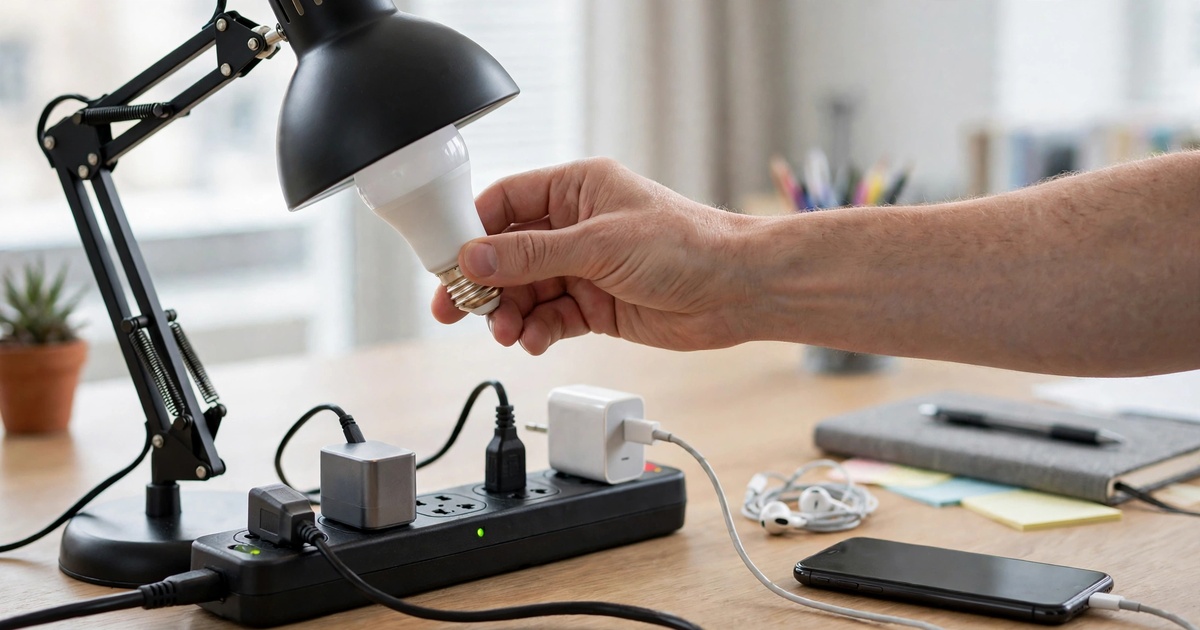
LEDs use far less electricity than old incandescent bulbs and last much longer. Start with the lights you use most, like the kitchen and living room. If a bulb is still working, finish it off before swapping, since tossing a working bulb creates its own waste.
2. Cut Standby Power
Many devices draw a little power even when they look “off,” including TVs, game consoles, and chargers. Plug your TV setup or home office into a power strip and switch it off at night. A smart strip (roughly $15-$30) can do this automatically, which helps if you know you’ll forget.
3. Turn the Thermostat Down a Little (and Layer Up)
Even a degree or two lower in winter, or higher in summer, trims energy use over a season. Pair it with warm throws and rugs so the house still feels good. If you want ideas, our guide on how to make your home feel more cozy covers textiles and lighting that make a slightly cooler room feel comfortable.
4. Draft-Proof Windows and Doors
Gaps around doors and windows let heated or cooled air escape. Weatherstripping and door sweeps cost roughly $10-$40 and take under an hour per door. Renters can use removable options like draft stoppers or temporary window film.
Safety note: Never block vents or air supplies for gas furnaces, water heaters, or fireplaces. They need airflow to burn safely. If your home has gas appliances, make sure carbon monoxide alarms are working before you seal anything.
5. Wash Cold and Air Dry
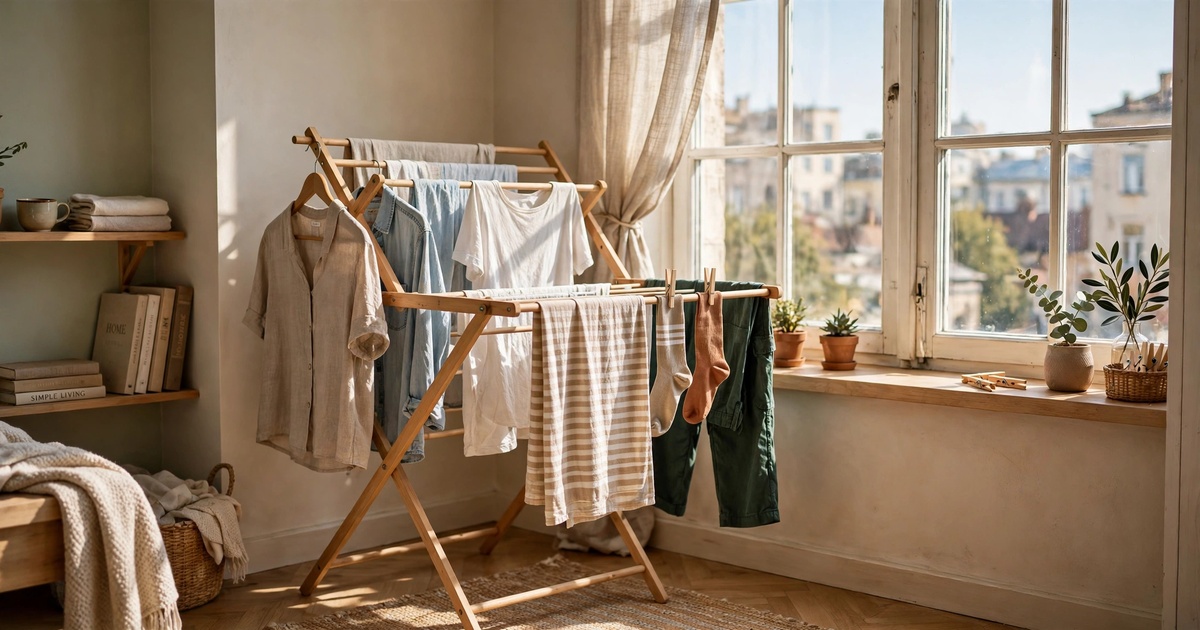
Most of the energy in a washing machine goes to heating the water, so cold cycles use much less. Modern detergents work well in cold water for everyday loads. Hang clothes on a rack or line when you can. A drying rack in a small apartment works fine near a window.
6. Check Your Water Heater Temperature
A water heater set higher than needed wastes energy. Many safety agencies suggest around 120°F (49°C), which also lowers scald risk. Don’t go below that, since cooler tanks can encourage bacteria growth. If your heater has no clear dial or you’re unsure how to adjust it, ask a licensed plumber or electrician.
Use Less Water
7. Fix Leaks and Add Aerators
A dripping tap or a running toilet wastes water around the clock. Many small fixes are cheap, like a new washer or flapper valve, often under $10. Faucet aerators and low-flow showerheads (roughly $5-$30) reduce use without changing how you wash. Shorter showers help too.
8. Water Your Garden Smarter
Water early in the morning so less evaporates, and water the soil, not the leaves. A rain barrel can collect roof runoff for plants. Check local rules first, since a few areas regulate collection. Mulch around plants to hold moisture, and choose plants suited to your climate so they need less watering.
Waste Less Food
9. Plan Meals Before You Shop
Food waste is one of the easiest places to make a difference. Write a simple plan for the week, check what you already have, and shop from that list. Plan one “use it up” night near the end of the week for leftovers and odds and ends.
10. Freeze Before It Spoils

Bread, cooked rice, sliced fruit, herbs in oil, and extra portions of soup all freeze well. Label containers with the date. Keep a “freeze it” habit at the end of each shopping week, not after things go bad.
11. Compost If You Can
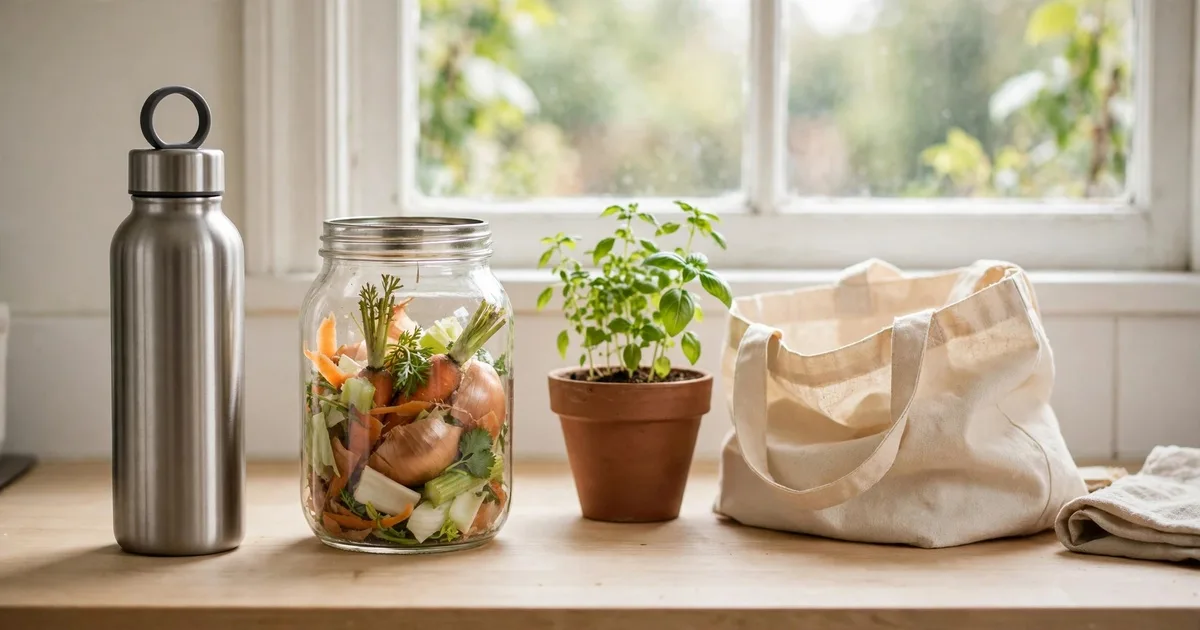
Composting keeps scraps out of the trash and turns them into soil. Backyards can use a bin or pile. Apartments can use a countertop collection bucket with a municipal pickup program or a community drop-off if your area offers one. Skip meat, dairy, and oils in simple home bins, since they attract pests.

12. Cook at Home More Often
Home cooking usually means less packaging and more control over portions. A few durable tools beat a drawer of gadgets that break. Our guide to essential kitchen tools for a home cook can help you buy fewer, better things that last.
13. Try a Few Meat-Free Meals
You don’t need to go fully vegetarian. Swapping in two or three plant-based dinners a week, like bean chili, lentil soup, or veggie stir-fry, reduces the footprint of your diet and often lowers your grocery bill. Pick dishes you already like so it doesn’t feel like a sacrifice.
Shop and Consume More Carefully
14. Carry Reusables
A refillable water bottle, a few tote bags, and a reusable coffee cup cover most single-use items. Keep them by the door or in your bag so you actually use them. The most sustainable reusable is the one you already own, so don’t buy a new set just for looks.
15. Buy Secondhand First
Thrift stores, online marketplaces, and local swap groups are good places to look for furniture, books, kitchenware, and clothing. Secondhand often costs less and avoids new production. Inspect furniture for stability, and skip used items with safety concerns, like old cribs, helmets, or car seats.
16. Repair Before Replacing
A loose chair leg, a torn seam, or a stuck zipper often takes minutes to fix. Basic repair skills save money and keep things out of the landfill. Look for local repair cafés or video tutorials for the item you own. For electrical appliances, check the manual first, and call a qualified repair service if it involves wiring or internal parts.
17. Simplify Your Cleaning Supplies
You rarely need a different spray for every surface. Many households do well with a basic all-purpose cleaner, dish soap, and a few cloths. Refill bottles or concentrates reduce plastic. If you make your own cleaners, keep them simple and label everything.
Safety note: Never mix bleach with ammonia or vinegar. The combinations can create harmful gases. Ventilate the room and wear gloves when cleaning with strong products. Avoid vinegar on natural stone like marble or granite, since it can etch the surface.
18. Choose Rechargeables and Durable Goods
Rechargeable batteries cost more upfront (roughly $15-$40 for a starter set), but they replace many disposable ones. The same logic applies to other items: one well-made pan or jacket often outlasts several cheap ones. Dispose of old batteries at a collection point, since loose batteries can cause fires in trash and recycling.
Rethink Travel and Power
19. Combine Trips and Use Alternatives
Group errands into one outing, walk or bike for short trips, and use public transit when it’s practical. If you drive, steady speeds and properly inflated tires help fuel efficiency. You don’t need to give up your car to make a difference; fewer, better-planned trips already help.
20. Ask About Renewable Energy Options
Many utilities offer a green power plan or community solar program. Availability and pricing differ widely by region, so check your provider’s website or call them. If you rent, this is often one of the few big energy choices you can still make without your landlord’s approval.
Common Mistakes to Avoid
- Buying new “eco” products to replace working ones. Using what you have is usually greener than replacing it.
- Trying everything at once. Burnout is the most common reason people quit. Start with three habits.
- Trusting vague green labels. Terms like “natural” or “eco-friendly” aren’t always regulated. Look for specific details like recycled content percentages or recognized certifications.
- Aiming for perfection. A household that makes ten small changes consistently beats one that makes a dramatic change and gives up.
When to Call a Professional
Some of the changes above touch systems that can be dangerous if handled wrong. Call a licensed professional if you’re dealing with any of the following:
- Electrical work: installing smart switches, rewiring, or fixing outlets. Always turn off power at the breaker first, and hire a licensed electrician if you’re not trained.
- Gas appliances: furnaces, boilers, or water heaters. Don’t adjust internal parts, and never seal off their air supply. If you smell gas, leave the building and call your gas provider or emergency services.
- Plumbing: hidden leaks, water heater repairs, or anything involving shutoff valves you can’t reach.
- Mold: if you find mold bigger than a small patch, or you suspect moisture inside walls, have it assessed by a professional.
- Heights: use a stable ladder and have someone nearby, or hire help for roof, gutter, or high window work.
FAQ
What is the easiest way to start a sustainable lifestyle?
Pick two or three habits that cost nothing, like washing laundry cold, planning meals, and carrying a reusable water bottle. They’re easy to repeat and need no special gear. Once those feel automatic, add another change, such as draft-proofing or composting.
Is a sustainable lifestyle expensive?
Not necessarily. Many habits, like cutting food waste, using less energy, and buying secondhand, reduce spending over time. Some items, like LED bulbs or rechargeable batteries, cost more upfront but pay off with use. You can skip expensive “green” products entirely.
What are the biggest changes a household can make?
Energy use, food waste, and transportation tend to matter most for typical households. Heating and cooling more carefully, wasting less food, and combining or reducing car trips usually have more impact than small swaps. Exact results depend on your home and location.
Can renters live sustainably too?
Yes. Renters can use LED bulbs, power strips, draft stoppers, cold-water laundry, composting programs, and secondhand shopping without changing the property. For larger upgrades, like insulation or appliances, ask your landlord, and check whether your utility offers a renewable energy plan.
Is it better to replace old appliances or keep them?
It depends. If an appliance still works and is safe, keeping it usually avoids waste. If it’s very old, breaks often, or uses a lot of energy, an efficient replacement may make sense over time. Look for your region’s efficiency labels, and recycle the old one properly.
Conclusion
A sustainable lifestyle doesn’t require a perfect home or a big budget. It comes from a handful of habits you repeat until you stop thinking about them. If you do one thing this week, plan your meals and cut down on food waste. It costs nothing, and you’ll see the difference in your trash can and your grocery bill. Next, choose one energy or water habit from this list and make it part of your routine.
Join our Telegram to get all the updates.


Comments (0)
Be the first to comment.