
 Home & Living
 Kitchen & Dining
 Gardening & Outdoors
 Home Organization
 Smart Home
 Home DIY
 Sustainable Living
 Daily Living Tips
Make Your Home Feel More Cozy: 15 Simple Ways
A room can have a good sofa, nice paint and a tidy shelf, and still feel a little cold. The missing pieces are usually small: harsh overhead light, bare floors, nothing soft within reach. This guide shows you how to make your home feel more cozy with changes that cost little, work in rentals, and take an afternoon or less. Start with lighting and textiles, since they make the biggest difference. Then add the rest as you like. You don’t need all fifteen.
Quick Answer
- Swap cool bulbs for warm ones (2700K or lower) and use lamps instead of the overhead light.
- Add soft layers: a throw, mixed pillows, a rug and full-length curtains.
- Keep surfaces clear, add a plant or two, and use a mild scent or soft background music.
- Most of these ideas cost $10-$80 each, and none require permanent changes.
What Actually Makes a Room Feel Cozy
Coziness is mostly about how a room feels to your body and eyes. Four things do most of the work: warm, low light; soft surfaces you want to touch; a layout that invites you to sit; and a calm, pleasant atmosphere (not too noisy, not too cluttered).
This article is based on common interior design guidance and typical feedback from people who’ve made these changes, not on my own testing. Prices below are rough US ranges and vary by store and region.
Cozy Home Ideas That Start With Lighting
1. Swap cool bulbs for warm ones
Bulbs labeled 2700K or lower give off a warm, yellow-toned glow. Anything around 4000K or higher looks like an office or a hospital corridor. This is the cheapest upgrade on the list, at roughly $3-$10 per bulb.
Best for: everyone, especially renters, since bulbs take seconds to change.
Tip: Replace every bulb in the room at once so the colors match. If your fixture has a dimmer, check that the new bulbs are labeled dimmable. If you want smart bulbs that shift from bright to warm through the day, If you want smart bulbs that shift from bright to warm through the day, look for ones labeled “tunable white” or “warm dim.
2. Use lamps instead of the overhead light
One bright ceiling fixture flattens a room. Two or three lamps at different heights create pools of light and shadow, which is what makes a space feel intimate. Table and floor lamps run about $15-$60 for basic versions.
Best for: living rooms and bedrooms.
Tip: Put one lamp near your main seat, one in a far corner, and one on a shelf or sideboard. In the evening, switch off the overhead light completely.
3. Add string lights (safely)
Safety first: Use only lights rated for indoor use. Check cords for fraying or cracked insulation before plugging in. Don’t chain more strands together than the manufacturer allows, don’t run cords under rugs, and don’t plug several heat-producing items into one outlet.
Soft string lights along a shelf, headboard or window frame add a gentle glow without taking up space. Battery-powered strands with a timer are a good choice for renters and for rooms with no nearby outlet.
Best for: bedrooms, reading corners and small apartments.
Tip: Warm white beats multicolor for a cozy feel.
Soft Textiles That Make a Room Feel Warmer
4. Drape a throw blanket where you’ll use it
A throw over the arm of the sofa or the foot of the bed does two jobs: it looks inviting, and it gives you something warm to grab. Wool, chunky cotton knit and fleece are all good picks. Expect roughly $20-$80.
Best for: anyone who sits on the sofa in the evening.
Tip: Keep a basket or ladder rack beside the seat so the blanket has a home and doesn’t end up in a pile.
5. Mix pillow textures
Three or four pillows in different fabrics (a linen cover, a knit one, a velvet one) look layered rather than matched. Buying covers only, and reusing your existing inserts, usually costs around $10-$30 each.
Best for: sofas and beds that look a bit flat.
Tip: Vary the sizes, and stop before the pillows leave no room to sit.
6. Put down a rug
Bare floors echo and feel cold underfoot, especially in winter. A rug fixes both. In a living room, at least the front legs of your sofa and chairs should sit on it. A 5x8 ft (1.5x2.4 m) rug suits a small seating area, and 8x10 ft (2.4x3 m) suits a larger one. Prices range widely, from about $60 for a basic size to $300 or more.
Best for: hard floors, apartments, and rooms that feel echoey.
Tip: Add a non-slip rug pad. It keeps corners flat so nobody trips. If you have kids or pets, look for a washable style.
7. Hang curtains that fill the window
Safety first: Use a stable step ladder on a flat floor, keep three points of contact, never stand on the top step, and ask someone to hold it. If you’re drilling into plaster, brick or drywall, use anchors rated for the weight of the rod and curtains. If the install is high or awkward, hire help.
Curtains that cover the whole window soften the room, block drafts, and make the space feel finished. Hang the rod 4-6 inches (10-15 cm) above the window frame and let it extend 6-10 inches (15-25 cm) past each side. Lined curtains feel warmer and hold the light better. A pair costs roughly $25-$120.
Best for: rooms with bare or blinds-only windows.
Tip: Renters can use a tension rod or adhesive hooks, but check the weight limit first.
8. Layer your bed
A bed with a fitted sheet, a duvet and one throw looks and feels ordinary. Add a quilt or blanket folded at the foot and a couple of textured pillows, and the room changes. Flannel suits winter, and cotton or linen keeps it comfortable in warm months.
Best for: bedrooms that feel plain.
Tip: Swap bedding with the seasons instead of buying a lot of it at once.
Scent, Sound and Atmosphere
9. Choose a mild scent
Smell is tied closely to mood. A candle, a reed diffuser or a stovetop simmer pot (water with orange peel and a cinnamon stick) can all make the home feel welcome.
Safety first: Burn candles on a stable, heat-safe surface, well away from curtains and shelves. Never leave a flame unattended, and put it out before you leave the room or go to bed. Trim the wick to about ¼ inch (6 mm) before each burn . Never leave a simmer pot unattended, either.
Best for: entryways, living rooms and kitchens.
Tip: Keep scents light. If you have pets, check with your vet before using essential oil diffusers, since some oils can harm animals.
10. Add quiet background sound
A silent house can feel empty, and a TV running in the background feels busy. Low instrumental music or a soft playlist sits in between. A small speaker on a shelf is enough.
Best for: open-plan homes and people who work from home.
Tip: Keep the volume low enough that you can hold a conversation without raising your voice.
11. Lean toward a warm color palette
You don’t have to repaint. Cream, terracotta, olive, rust and soft browns in pillows, throws and art will warm up a room fast. If you do paint, a warm white usually feels softer than a stark, blue-leaning white.
Best for: rooms that feel clinical or gray.
Tip: Test paint on a large swatch, around 2x2 ft (60 cm), and look at it in the morning and at night before you commit.
Layout and Clutter
12. Make a corner for sitting and reading
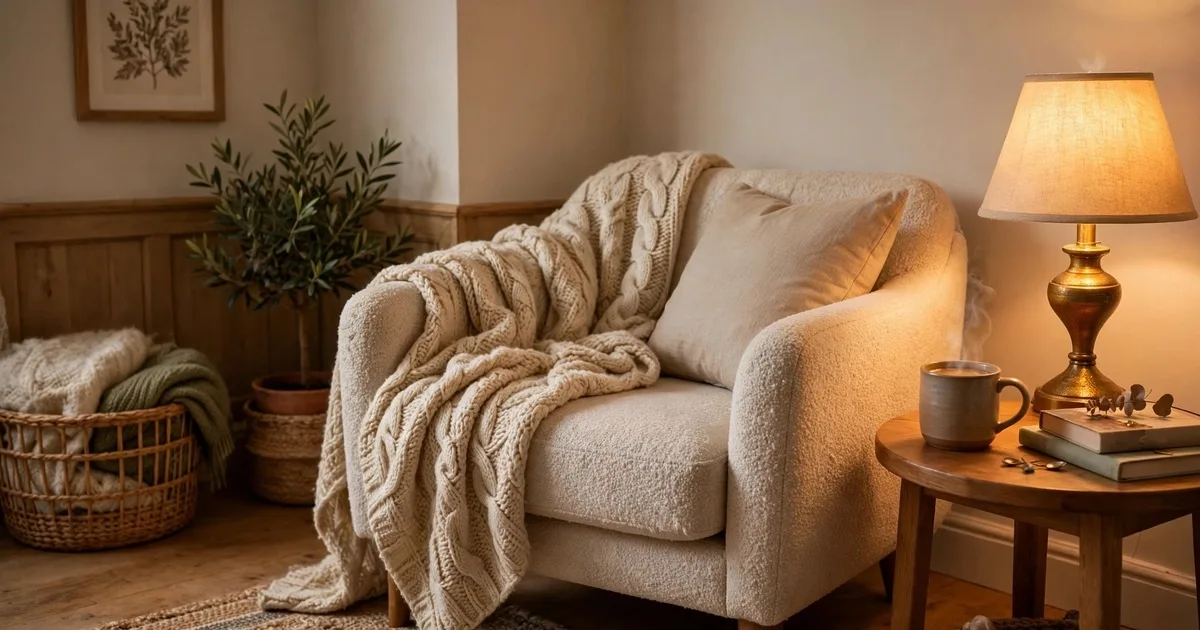
A chair, a lamp, a small side table and a blanket make a “nook,” and it works even in a studio apartment. The point is a spot that says “sit here.”
Best for: small spaces and people who like to read.
Tip: Angle the chair slightly toward the room instead of pushing it flat against the wall, and keep a surface close for your drink.
13. Clear the surfaces you see most
Cozy doesn’t mean minimalist, but visible clutter makes a room feel busy and tense. Choose one or two surfaces, like the coffee table and the kitchen counter, and keep just a few items on them.
Best for: families and anyone short on storage.
Tip: Put a basket in each main room to catch loose items, and empty it weekly.
14. Bring in plants
Greenery softens hard edges and adds life to a room. Low-light plants like pothos or snake plants are forgiving, and most cost about $10-$40. Faux plants or dried branches work if you travel often.
Best for: windowsills, shelves and bare corners.
Tip: If you have cats or dogs, check each plant against a pet-toxicity list first, because several common houseplants are harmful if chewed.
15. Show a few personal things
A houseful of generic décor feels like a showroom. Framed photos, stacked books, a handmade bowl or a travel souvenir make it feel like yours. Group items in threes and mix heights.
Best for: any home that feels impersonal.
Tip: Use removable adhesive strips for frames in a rental, and stay within the stated weight limit.
Cost and Effort at a Glance
| Idea | Rough cost (USD) | Time | Renter-friendly |
|---|---|---|---|
| Warm bulbs | $3-$10 each | 5 min | Yes |
| Lamps | $15-$60 | 10 min | Yes |
| String lights | $10-$30 | 15 min | Yes |
| Throw blanket | $20-$80 | None | Yes |
| Pillow covers | $10-$30 each | 5 min | Yes |
| Rug | $60-$300+ | 15 min | Yes |
| Curtains | $25-$120 | 1-2 hrs | Usually |
| Bedding layers | Varies | 20 min | Yes |
| Candle or diffuser | $8-$30 | 5 min | Yes |
| Plants | $10-$40 | 15 min | Yes |
Prices vary by store, size and region.
Mistakes to Avoid When You Make Your Home Feel More Cozy
- Buying décor before fixing the light. Harsh light undoes everything else.
- Matching everything. A perfectly matched set looks flat. Mix textures within a color family.
- Too many pillows. If you have to move six cushions to sit down, they’re in the way.
- Strong scents. Heavy fragrance can give guests headaches and bother pets.
- Going too dark. Warm doesn’t mean dim. Keep enough light to read and move around safely.
When to Call a Professional
Call a licensed electrician if lights flicker, an outlet or plug feels warm, a breaker keeps tripping, or you want a hardwired fixture or dimmer installed. Don’t attempt wiring yourself.
Get help for anything heavy or high, such as mounting rods into plaster or brick, or reaching windows above a safe ladder height.
If a room smells musty or you notice damp patches, that’s not a cozy problem. It could be moisture or mold, and a professional should look at it before you decorate around it.
FAQ
How can I make my home cozy on a budget?
Start with warm bulbs, a lamp and a throw blanket. Together these usually cost under $60 and change the feel of a room more than most big purchases. Then add pillow covers, a plant or a rug, one piece at a time, as your budget allows.
How do I make a rental apartment cozy without permanent changes?
Focus on things you can take with you: bulbs, lamps, rugs, throws, pillow covers, plants and tension rods. Use removable adhesive strips for frames and hooks, and check the weight limits. Avoid drilling or painting unless your lease allows it.
What colors make a room feel cozy?
Warm tones like cream, beige, terracotta, rust, olive and soft brown tend to feel inviting. Cool grays and stark whites can feel clinical. You don’t need to repaint. Changing pillows, throws and art in these shades makes a visible difference.
Does making a room cozy lower my heating bill?
Not reliably. Rugs, lined curtains and draft-stopping touches can make a room feel warmer, and they may cut drafts, but savings vary by home and climate. Treat them as comfort upgrades, not a guaranteed way to save money on heating.
How do I make a big, empty room feel cozy?
Break it into zones. Put a rug under the seating area, add lamps at different heights, and hang curtains that reach the floor. Angle furniture toward each other instead of lining it up along the walls, and add one or two soft layers like a throw and pillows.
Conclusion
You don’t need a renovation to make your home feel more cozy. Warm light, a few soft layers and a clear surface or two will do most of the work. Pick one idea from this list today, probably the bulbs and a lamp, and see how the room feels tonight. Then add a rug, curtains or a reading nook when you’re ready.
Join our Telegram to get all the updates.


Comments (0)
Be the first to comment.