
 Home & Living
 Kitchen & Dining
 Gardening & Outdoors
 Home Organization
 Smart Home
 Home DIY
 Sustainable Living
 Daily Living Tips
20 Simple Home Organization Ideas for a Tidy Space
You tidy the counter on Sunday, and by Wednesday the mail, keys, and half a dozen mugs have taken it back. That's rarely a discipline problem. It's a storage problem: when things have no obvious home, they pile up on the nearest flat surface. These home organization ideas fix that with small, low-cost changes you can finish in an afternoon, room by room. Most cost under $30, and many work in rentals. Pick the three that match your biggest daily annoyance, finish those, and add more once they feel automatic.
Quick answer: The most effective home organization ideas give every item one fixed home, use vertical space, and make putting things away take a single step. Start here:
- Drawer dividers and clear containers in the kitchen
- A hook-and-tray landing spot at the door
- Vertical folding and slim hangers in the closet
- Labels plus a 10-minute daily reset to keep it going
Rough total: $40–$100 USD (prices vary by store and region).
These ideas are based on widely used organizing methods and common reader and owner reports, not lab-style product testing.
Safety Notes Before You Mount or Plug Anything In
A few of the ideas below involve walls, cords, or cleaning products. Read these first.
- Anchor tall or heavy furniture and shelves to wall studs, especially with kids or pets in the house. Stud spacing is often around 16 inches (40 cm) in US homes but varies, so use a stud finder.
- Check for hidden wires and pipes before drilling. If you can't tell what's behind the wall, stop and ask a professional.
- Use a stable step stool or ladder. Keep three points of contact and never stretch sideways to reach a high shelf.
- Don't overload power strips or cover them with fabric or boxes that trap heat.
- Store cleaning products and medicines in closed, high, or locked spots away from children and pets. Never mix bleach with ammonia-based cleaners.
- Respect weight ratings on adhesive hooks and over-door racks.
- Renting? Check your lease before drilling.
What These Fixes Usually Cost
Approximate US prices; yours will vary.
| Item | Rough cost (USD) |
|---|---|
| Adjustable drawer dividers | $8–$25 |
| Lazy Susan (turntable) | $10–$25 |
| Clear stackable containers (set) | $15–$40 |
| Adhesive or screw-in wall hooks | $5–$20 |
| Slim hangers (30-pack) | $15–$30 |
| Under-bed storage bins | $15–$40 |
| Cord clips and ties | $5–$20 |
| Sorting hamper | $25–$60 |
| Storage ottoman | $40–$120 |
| Marker and tape, or label maker | $5 or $20–$40 |
Easy Home Organization Ideas for the Kitchen
1. Divide Your Utensil Drawer
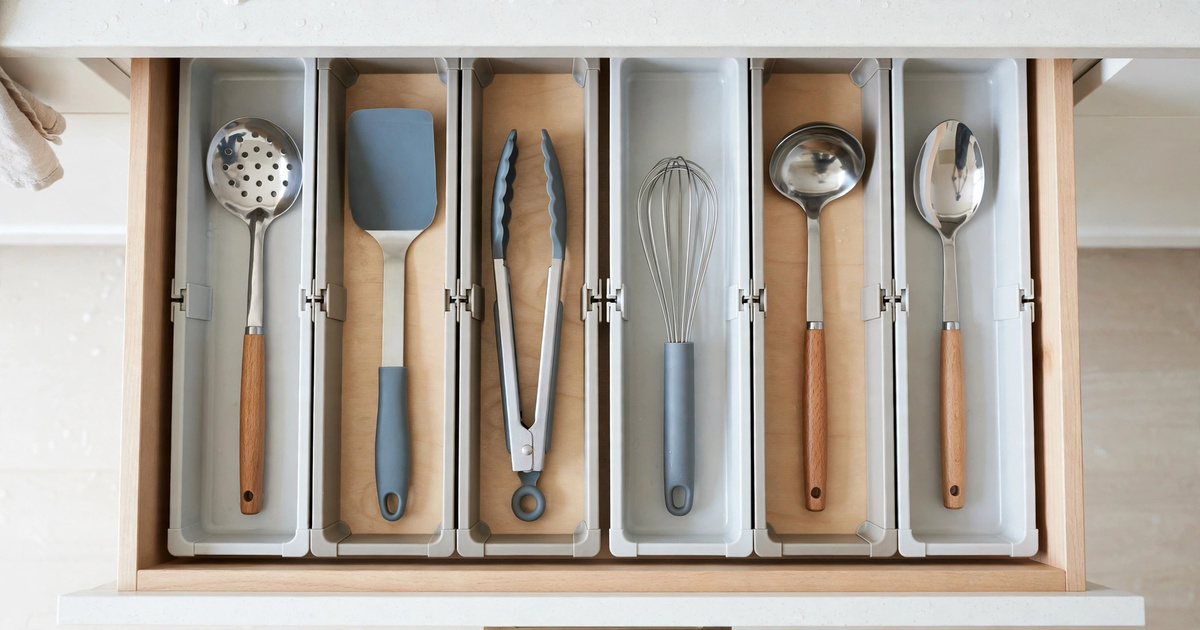
A drawer with no dividers becomes a jumble where you dig for one spatula. Dividers give each tool its own lane so you can see everything at once. This suits anyone with shallow drawers and too many gadgets.
Tip: Measure the drawer's width, depth, and height first, then buy adjustable dividers so they fit snugly and don't slide.
2. Add a Turntable to Deep Cabinets
Items at the back of a deep cabinet get forgotten, expire, and get bought twice. A spinning tray (a lazy Susan) brings them to you with one turn. It works well for corner cabinets, oils, spices, and sauces in the fridge.
Tip: Choose one with a raised lip so bottles don't slide off when you spin it.
3. Store Pot Lids Upright
Lids stacked in a pile slide and clatter every time you reach for one. A free-standing rack or a sturdy file holder keeps each lid visible. It's a good fix for small kitchens with one cupboard for all the cookware.
Tip: Sort lids by size, and choose a rack that sits on the shelf. No drilling means it works in rentals.
4. Decant Pantry Staples Into Clear Containers
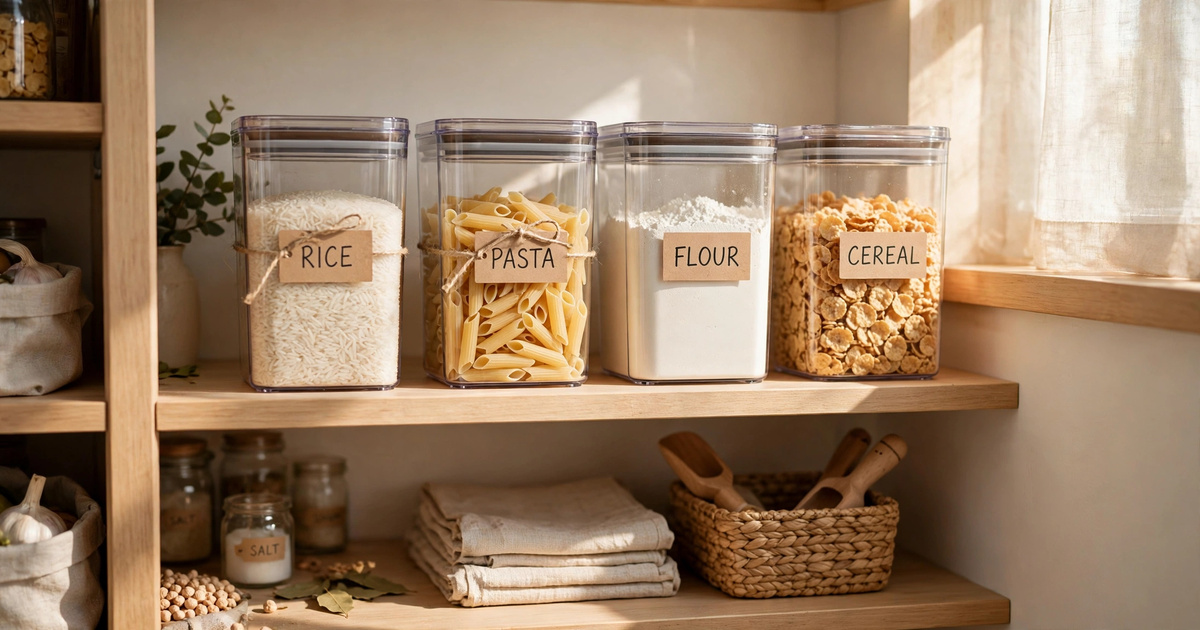
Half-open bags tip over and hide what you actually have. Stackable clear containers show levels at a glance and keep flour, rice, pasta, and cereal sealed. This is best for people who keep buying a third bag of rice.
Tip: Wash and fully dry containers before filling them, and write the best-by date on a label so it doesn't get lost when you decant.
5. Keep Counters to Daily-Use Items Only
Clear counters make cooking easier and wiping down faster. If you don't use something every day, it goes in a cabinet. This helps most in small kitchens where counter space is scarce.
Tip: Run a one-week test. Anything you didn't touch moves out of sight. For help deciding which gadgets earn their space, see this guide to essential kitchen tools for a home cook.
Home Organization Ideas for Entryways and Living Rooms
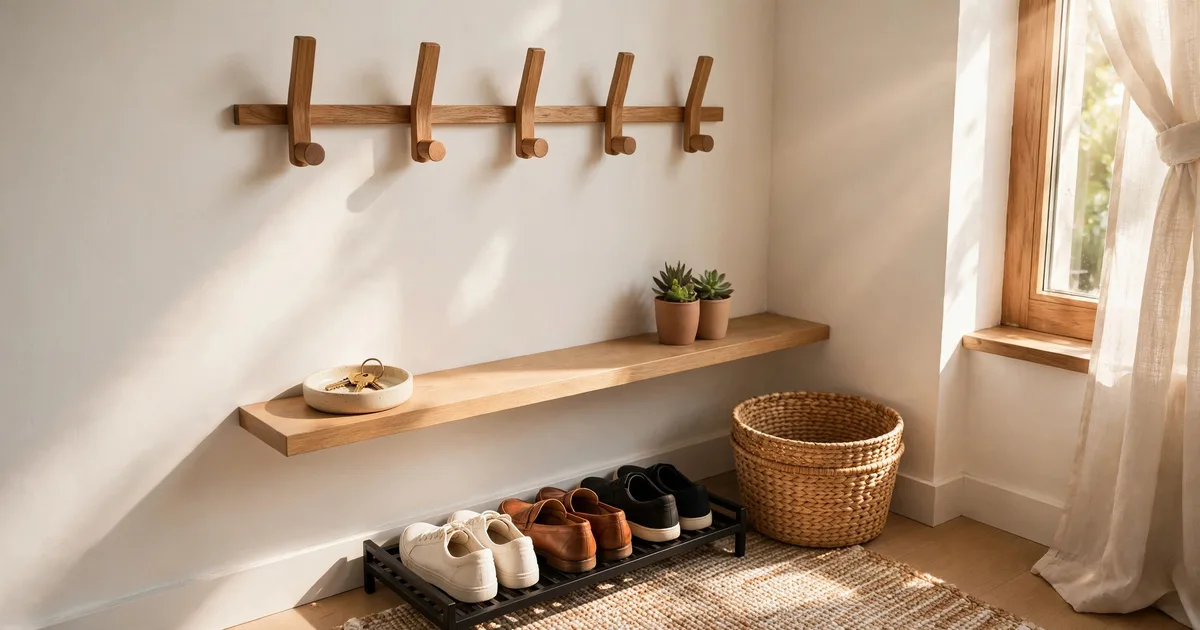
6. Build a Hook-and-Tray Landing Spot
Door-zone clutter happens because there's nowhere to drop things. A row of hooks and a shallow tray for shoes handle coats, bags, and footwear in one spot. It works for families, pet owners, and renters, since adhesive hooks avoid drilling.
Tip: Hang a low row of hooks, about 40 inches (100 cm) from the floor, so kids can reach them.
7. Create a Key-and-Mail Station
One small dish or wall pocket for keys and one tray for mail that needs action keeps the rest of the house clear. It's a quick win for anyone who loses keys weekly. Cost is usually under $15.
Tip: Sort mail over the recycling bin the moment it arrives. Only keep what needs a response.
8. Choose Furniture With Hidden Storage
A storage ottoman or a coffee table with a lid or shelf swallows blankets, remotes, and toys. It gives small living rooms extra storage without adding another piece of furniture.
Tip: If young children are around, look for a slow-close lid to avoid pinched fingers.
9. Tame the Cords
A tangle behind the TV collects dust and makes the whole room look messy. Cable clips, reusable Velcro ties, and a cord box group them neatly. Desks and TV stands benefit most.
Tip: Label each cord end with a small piece of tape. Don't wrap power cords tightly, and leave ventilation around any power strip or box that holds one.
Bedroom and Closet Organization Ideas
10. Switch to Slim, Matching Hangers
Bulky mismatched hangers waste rod space and let clothes slip off. Slim, uniform hangers give you noticeably more room and make the closet look calmer. They help most in small closets.
Tip: Group by type first (shirts, pants, dresses), then by color within each group.
11. Fold Clothes Vertically
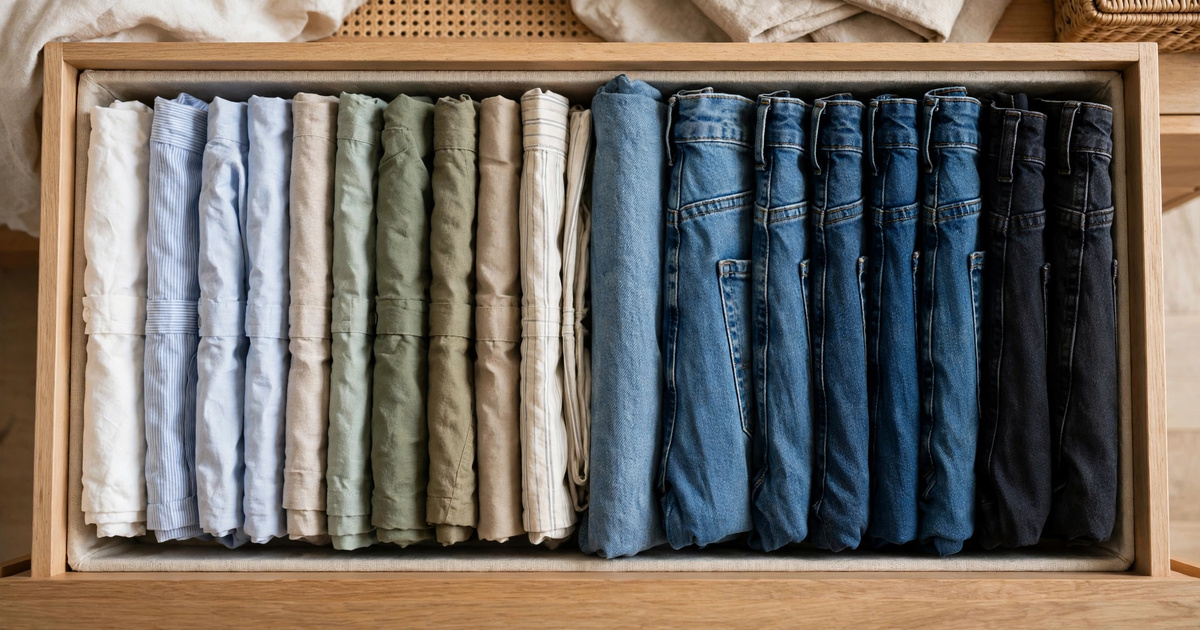
Fold shirts, jeans, and leggings into small rectangles and stand them up like files in the drawer. You see every piece at once instead of just the top of a stack. It suits any dresser with deep drawers.
Tip: If a thin knit won't stand up, group those pieces in a small bin inside the drawer.
12. Use Under-Bed Bins
Many beds leave 6–12 inches (15–30 cm) of dead space underneath. Low bins with lids hold off-season clothes, extra bedding, and shoes. They're ideal for small bedrooms and studios.
Tip: Measure the clearance under your bed before buying. Bins with wheels are easier to pull out.
13. Add Shelf Dividers
A stack of sweaters collapses the moment you pull one out. Dividers keep each stack separate and upright. They work on closet shelves for sweaters, towels, and bags.
Tip: Clip-on or acrylic dividers fit most shelves and don't need tools.
Bathroom and Laundry Organization Ideas
14. Stack Bins Under the Sink
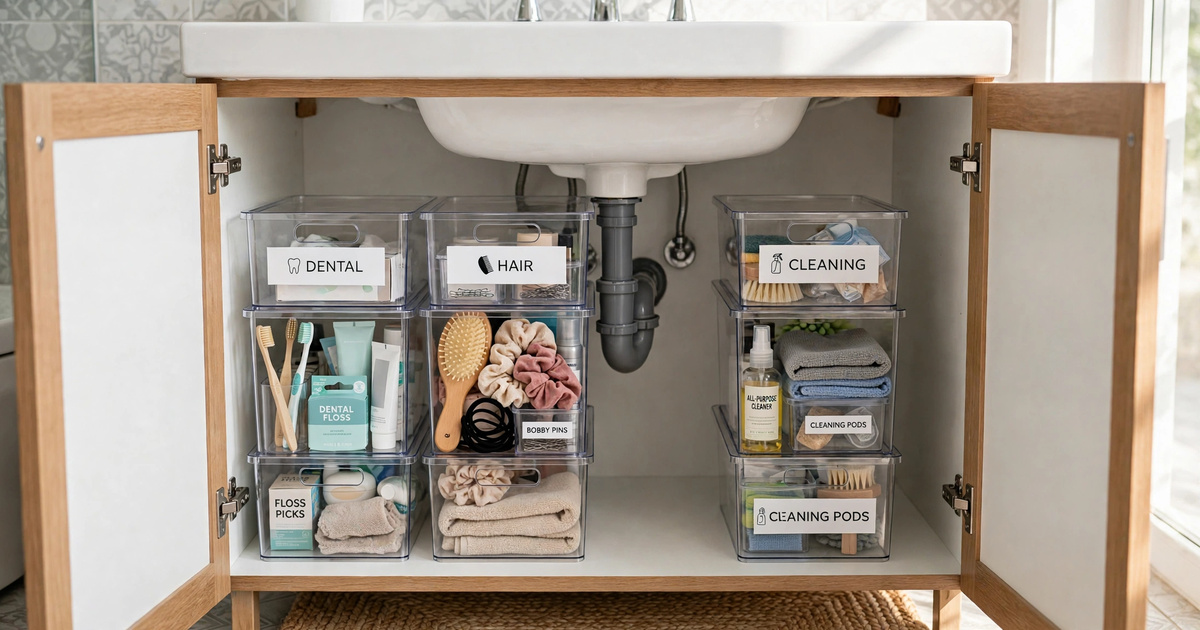
Under-sink space is awkward because of the pipes. Stackable bins or a U-shaped organizer work around the plumbing and stop products from falling over. They suit shared bathrooms.
Tip: Group by use, such as dental, hair, and cleaning. Keep cleaning products and medicines out of reach of children and pets, and never mix bleach with ammonia-based cleaners.
15. Use Vertical Bathroom Shelving
An over-the-toilet shelf unit or a narrow rolling cart adds storage in a tiny bathroom without taking up floor space. It's best when you have no cabinet room.
Tip: Free-standing units need a stable base. Wall-mounted ones need studs or the right anchors, so see the safety notes above.
16. Use a Sorting Hamper
A hamper with two or three compartments lets you sort lights, darks, and delicates as clothes come off. It cuts laundry-day sorting to almost nothing. It's especially useful in busy or shared households.
Tip: Put it where clothes actually come off, not where it looks tidiest.
Simple Home Organization Ideas for Small Spaces and Everyday Habits
17. Label Everything
Labels tell everyone in the house where things go, including kids and guests. This works best in shared homes where "I didn't know where it went" is a common excuse.
Tip: Label the shelf edge as well as the container so the home for each item is obvious. A marker and tape costs under $5.
18. Use Vertical Space
Wall shelves, tall bookcases, and hooks turn unused wall height into storage. They're the best fix for studios and small apartments.
Tip: Put daily-use items between knee and shoulder height and heavy items low. Strap tall bookcases to the wall, and check your lease first if you rent.
19. Keep a Donation Box in Plain Sight
A box by the closet or entryway catches things as you notice them, so decluttering becomes a steady habit. It suits anyone with more stuff than storage.
Tip: Add a one-in, one-out rule: when something new arrives, something leaves.
20. Finish With a 10-Minute Daily Reset
Set a timer and return everything to its home. After a week or two it becomes routine, and the house never builds up to a weekend-long cleanup. It works for busy families. Once surfaces are clear, it's also much easier to make your home feel more cozy.
Tip: Do it right after dinner, when the day's clutter is fresh and the whole household is around to help.
Common Mistakes to Avoid
- Buying containers before decluttering. Sort first, measure second, buy third. Otherwise you're storing things you don't need.
- Skipping the tape measure. Matching sets look great online and then don't fit the drawer.
- Tackling everything at once. One zone per weekend is realistic, and it keeps you from burning out.
- Building complicated systems. If putting something away takes more than one step, it won't happen on a tired Tuesday.
- Storing heavy items up high. Keep them at waist height or below.
When to Call a Professional
- Electrician: warm or discolored outlets, breakers that trip often, or a need for more outlets instead of stacking power strips.
- Handyperson or contractor: mounting heavy shelving or large furniture, working in plaster or brick, or any time you can't find studs.
- Plumber: any leak under a sink or around pipes.
- Mold specialist: mold that covers more than a small patch or keeps returning after cleaning.
Frequently Asked Questions
Where should I start when organizing my home?
Start with the spot that annoys you most every day, usually the entryway, kitchen counter, or bedroom closet. Finish one small zone in an hour or two before moving on. A quick win builds momentum, and you'll learn what storage you actually need before spending money.
How do I organize a small apartment with little storage?
Use vertical space, choose furniture with built-in storage, and keep only daily-use items on surfaces. Wall hooks, tall narrow shelves, and under-bed bins add storage without eating floor space. In a rental, pick free-standing or adhesive options and check your lease before drilling.
How much does it cost to get organized?
You can make a real difference for roughly $40–$100 using dividers, bins, hooks, and labels, though prices vary by store and region. Start with boxes and containers you already own, then buy only what's missing after you've decluttered and measured.
How often should I declutter?
A quick 10-minute reset each day and a deeper sweep of one area each month is enough for most households. Add a bigger pass when you swap seasonal clothes. Small, regular passes stop clutter from growing into a weekend-long project.
What's the best way to keep a home organized long term?
Give every item one clear home, label it, and make putting things back take a single step. Then keep the daily reset habit and a one-in, one-out rule for new purchases. Systems that need more than one step tend to fall apart.
Start With One Spot
These home organization ideas work best when they're boring: one home per item, easy to reach, easy to put back. You don't need everything on this list. Pick the single spot that bugs you most, fix it this week with a divider, a hook, or a bin, and see how long it stays tidy. Then move on to the next zone. Small, repeatable systems usually beat a big weekend overhaul.
Join our Telegram to get all the updates.

Comments (0)
Be the first to comment.