
 Home & Living
 Kitchen & Dining
 Gardening & Outdoors
 Home Organization
 Smart Home
 Home DIY
 Sustainable Living
 Daily Living Tips
Essential Kitchen Tools Every Home Cook Should Have
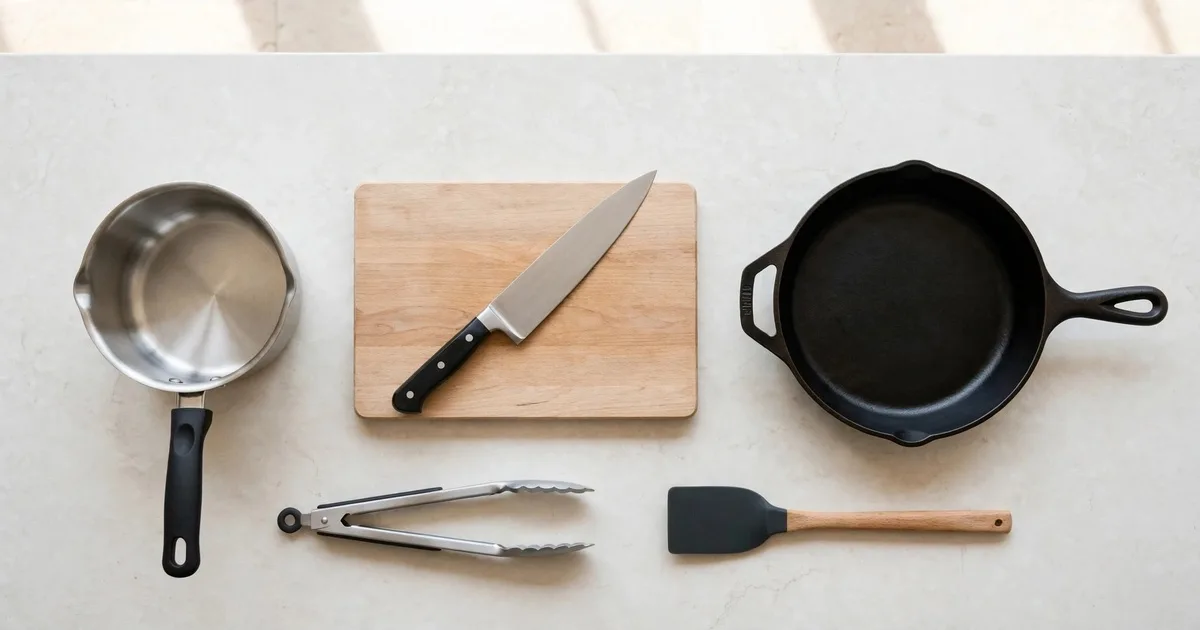
You can fill a kitchen with 60 gadgets and still struggle to make dinner. A dull knife, a warped pan and no way to measure properly cause far more trouble than a missing avocado slicer ever will. This guide covers the essential kitchen tools home cooks actually use every week, what to look for in each one, rough costs, and what to skip. It suits first apartments, new cooks, and anyone whose drawers are full of things they never touch. Buy the core kit first, then add the rest only when you notice a real gap.
Quick Answer
- Cutting: an 8-inch chef’s knife, a paring knife, a serrated bread knife and two cutting boards.
- Cooking: one 10-12 inch skillet, a 2-3 quart saucepan, a 6-8 quart pot and a rimmed sheet pan.
- Hand tools: tongs, a spatula, a wooden spoon, a whisk and a colander.
- Measuring: measuring cups and spoons, a digital scale and an instant-read thermometer.
- Budget roughly $250 at the low end and $600+ at the premium end if you buy everything new. You can spread it over months.
How to Choose Essential Kitchen Tools
This guide is based on general product-category knowledge, specifications and common owner feedback, not my own testing. Prices are rough US ranges and vary by store and region.
A few rules save money across the whole list:
- Buy fewer, better items for the tools you use daily. A knife, skillet and pot do more work than everything else combined.
- Hold it if you can. A tool that feels awkward in your hand will stay in the drawer.
- Check the care rules. Some pans and boards can’t go in the dishwasher. If you won’t hand wash, don’t buy them.
- Count your storage. In a small kitchen, nesting bowls and multi-use pots beat bulky sets.
- Skip the big sets. A 15-piece knife block usually contains several knives you’ll never pick up.
Cutting and Prep Tools
Safety first: Cut on a stable board (a damp towel underneath stops it sliding), curl your fingertips under, and never try to catch a falling knife. Store knives in a block, on a magnetic strip or in a sheath, not loose in a drawer.
1. Chef’s knife
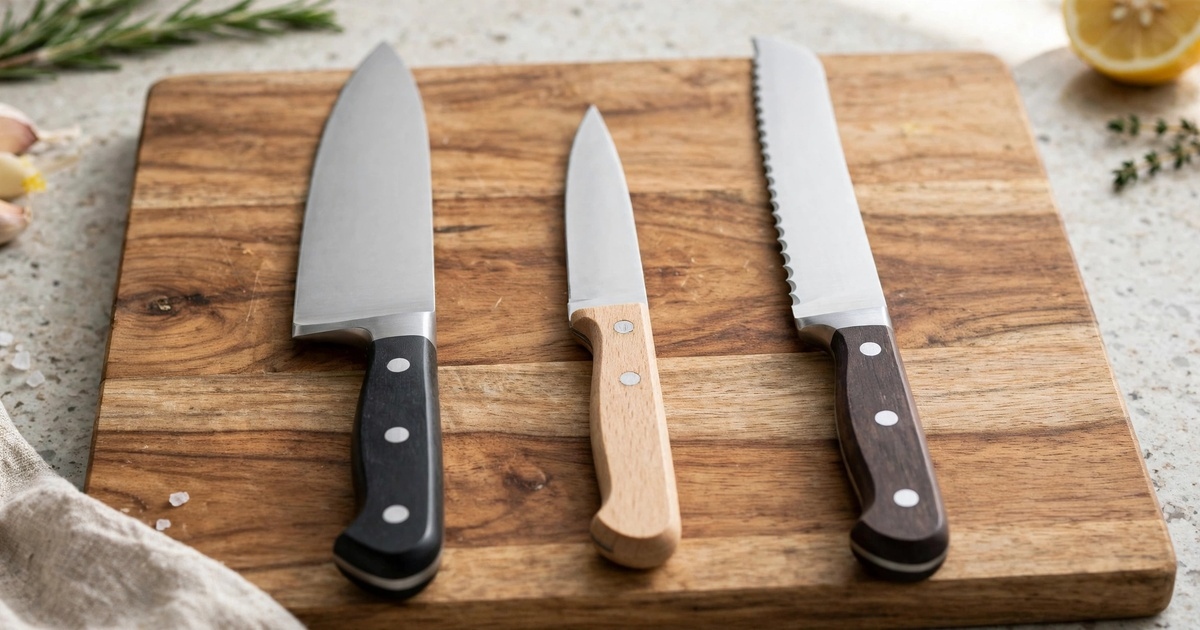
This is the one tool worth spending real money on. An 8-inch (20 cm) blade handles most chopping, slicing and dicing. Look for a comfortable grip, a balanced feel and a blade that doesn’t flex. Expect roughly $25-$150.
Tip: A sharp knife is safer than a dull one, because it needs less force and slips less.
2. Paring knife
A 3-4 inch (8-10 cm) blade is for peeling, trimming and small jobs where a chef’s knife feels clumsy. Roughly $8-$25. A cheap one is fine here.
3. Serrated bread knife
The saw-like edge cuts crusty bread, soft cakes and ripe tomatoes without crushing them. Look for 8-10 inches (20-25 cm). Roughly $15-$50.
4. Two cutting boards
Use one for raw meat and poultry, and one for produce and bread. This reduces the chance of cross-contamination. Plastic boards can usually go in the dishwasher. Wood is gentler on knife edges but needs hand washing. Look for at least 12x18 inches (30x46 cm). Roughly $15-$60 each.
Tip: A board that slides is a hazard. Pick one with a non-slip base or use a damp towel.
5. Honing rod or sharpener
Knives dull with use. A honing rod keeps the edge aligned between sharpenings, and a whetstone or pull-through sharpener restores it. Roughly $15-$60. If you’re not comfortable sharpening, many hardware and kitchen stores offer sharpening services.
6. Vegetable peeler
A Y-shaped or swivel peeler is faster and safer than using a paring knife for carrots and potatoes. Roughly $5-$15.
7. Box grater
Cheese, carrots, zucchini, onions and citrus zest all go through it. Pick one with a sturdy base and sharp, clearly marked sides. Roughly $10-$25.
8. Kitchen shears
Good for snipping herbs, trimming meat fat, cutting open packaging and spatchcocking a chicken. Choose a pair that comes apart for cleaning. Roughly $10-$30.
Pots, Pans and Bakeware
9. A 10-12 inch skillet
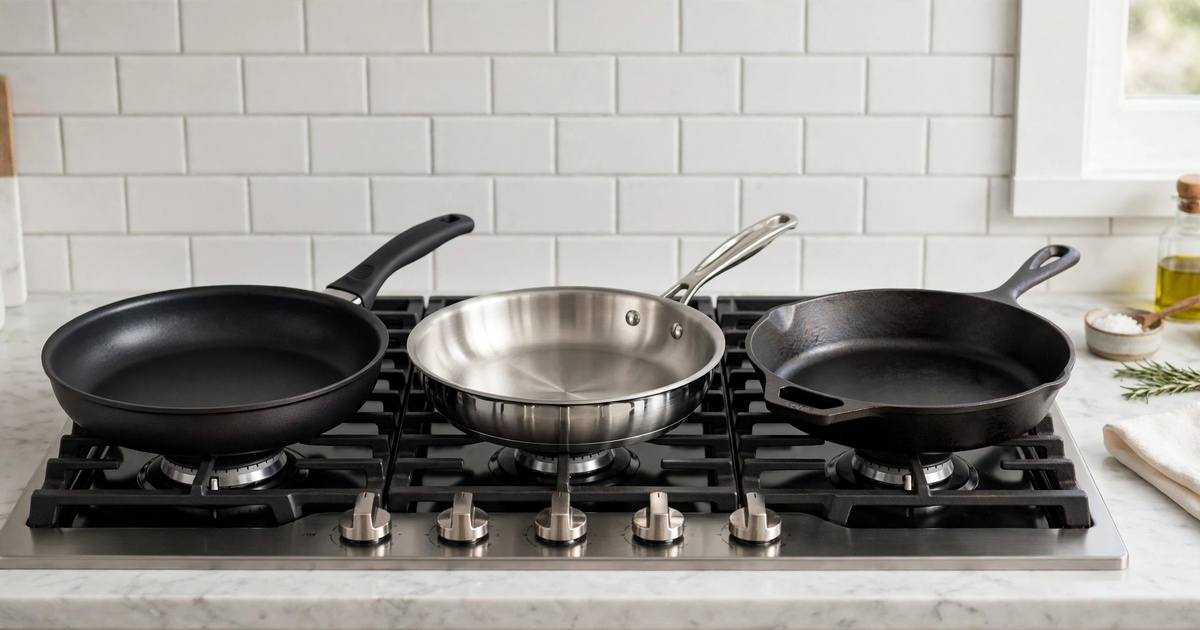
If you buy one pan, buy this. Which type depends on how you cook:
- Nonstick: best for eggs and delicate fish, and easy to clean. It wears out with use, so expect to replace it every few years. About $20-$50.
- Stainless steel: durable and good for searing and pan sauces, but food sticks until you learn heat control. About $30-$150.
- Cast iron: heavy, lasts for decades, holds heat well, and needs seasoning and hand washing. About $20-$60 for a basic skillet.
Safety first: Don’t preheat an empty nonstick pan on high heat. Overheated nonstick coatings can release fumes that are harmful to pet birds, so keep birds out of the kitchen when cooking. Retire a nonstick pan once the coating flakes or is deeply scratched. Cast iron handles stay hot, so always use a mitt.
10. Saucepan with a lid
A 2-3 quart (1.9-2.8 L) saucepan covers rice, oatmeal, sauces, reheating soup and boiling eggs. Look for a thick, flat base so it heats evenly. Roughly $30-$120.
11. Large pot
A 6-8 quart (5.7-7.6 L) pot is for pasta, soup, stock and chili. A single heavy-bottomed stainless pot with a lid can do a lot. Roughly $30-$100.
12. Dutch oven (optional)
A 5.5-6 quart (5-5.7 L) enameled cast-iron pot is excellent for braises, stews, no-knead bread and slow-cooked dishes. It’s heavy and costs more, roughly $50-$400.
Who should skip it: If you rarely braise or bake bread, your large pot will do most of the same jobs.
13. Rimmed sheet pans
A half-sheet pan (about 18x13 inches / 46x33 cm) is used for roasting vegetables, baking cookies and cooking sheet-pan dinners. Buy two if you can. Thicker aluminum pans resist warping. Roughly $12-$30 each.
14. Baking dish and cooling rack
A 9x13 inch (23x33 cm) glass or ceramic dish handles casseroles, lasagna, roasted chicken thighs and brownies. A wire rack lets cookies and roasted food cool without steaming. Roughly $12-$30 each.
Hand Tools and Utensils
15. Wooden spoons and silicone spatulas
Wooden spoons won’t scratch pans and don’t get hot. Heat-resistant silicone spatulas scrape bowls clean and work in nonstick pans. Roughly $5-$15 each. Replace anything cracked, since cracks hold bacteria.
16. Tongs
Tongs turn meat, toss salads and lift pasta. Look for a locking mechanism and 9-12 inch (23-30 cm) length, which keeps your hand away from heat. Roughly $8-$20.
17. Slotted turner
A thin, flexible turner slides under eggs, fish and pancakes without tearing them. Use a plastic or silicone one on nonstick pans, because metal scratches the coating. Roughly $8-$20.
18. Whisk
A medium balloon whisk handles eggs, vinaigrettes, batters and gravies. Roughly $6-$15.
19. Ladle and slotted spoon
You’ll use the ladle for soup and sauce, and the slotted spoon for lifting items out of liquid. Roughly $6-$15 each.
20. Colander and fine-mesh strainer
A colander drains pasta and washes produce. A fine-mesh strainer handles rice, quinoa, stock and sifting dry ingredients. Roughly $10-$25 each.
21. Can opener
Choose a smooth-turning handheld model with a comfortable grip. Roughly $8-$20.
Measuring and Temperature Tools
22. Measuring cups and spoons
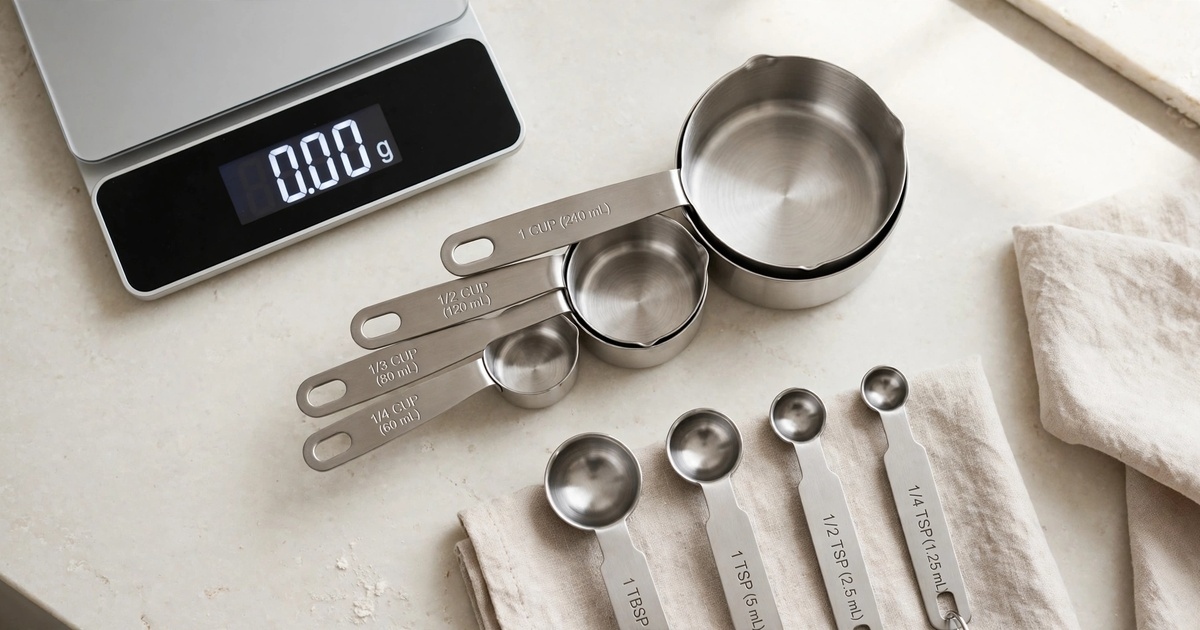
You need nested dry cups and a set of spoons. Add a clear 2-cup (500 ml) liquid measuring cup with a spout. Using the wrong type changes results, especially in baking. Roughly $8-$20 per set.
23. Digital kitchen scale
A scale that switches between grams and ounces and has a tare button gives you consistent baking, easier portioning and fewer dishes. Roughly $12-$35.
24. Instant-read thermometer
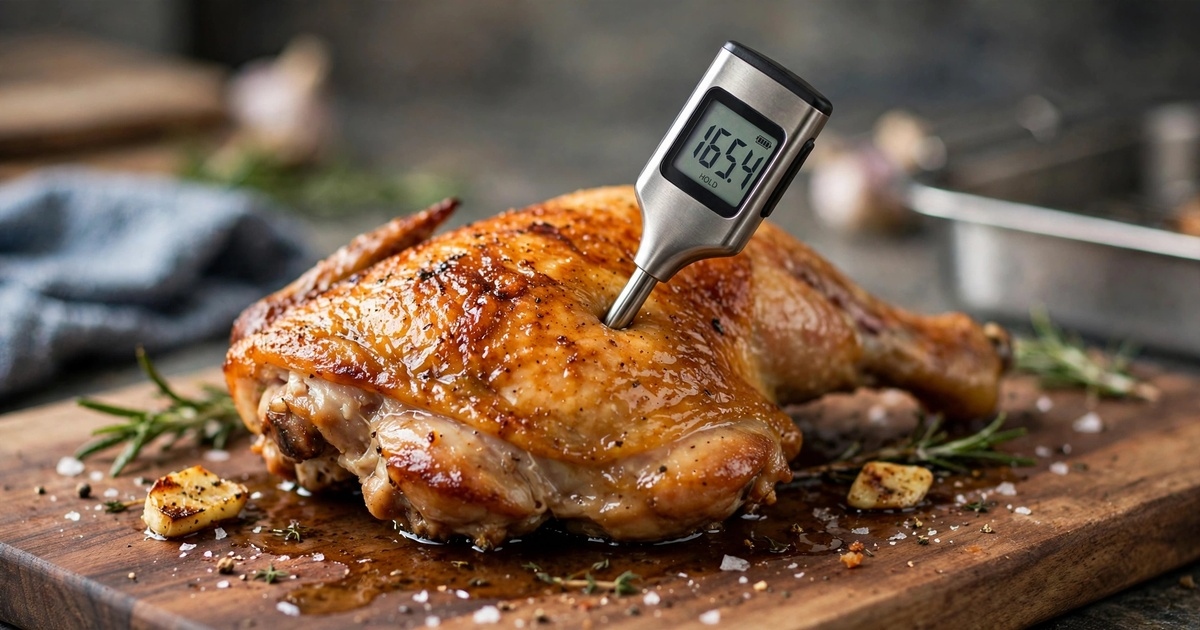
This takes the guesswork out of cooking meat and prevents both undercooked and dried-out results. Insert it into the thickest part without touching bone. USDA guidance lists 165°F (74°C) for poultry and 160°F (71°C) for ground meats. Roughly $12-$100.
Mixing, Storage and Cleanup
25. Nesting mixing bowls
A set of three sizes in stainless steel or glass covers batters, salads and marinades. Nested sets save space. Roughly $15-$40.
26. Food storage containers
Choose a set with matching lids so storing and stacking is easy. Glass resists stains and odors but is heavier. Check the label before microwaving plastic. Roughly $15-$50.
27. Oven mitts or pot holders
Silicone and thick cotton both work. Keep them dry, because damp fabric conducts heat quickly. Roughly $10-$25.
What to Buy First, Next and Later
| Priority | Tools | Rough total (USD) |
|---|---|---|
| Buy first | Chef’s knife, cutting board, skillet, saucepan, tongs, spatula, wooden spoon, measuring cups and spoons, oven mitts | $125-$450 |
| Add in a few months | Large pot, sheet pan, colander, mixing bowls, thermometer, peeler, can opener, paring knife, bread knife | $115-$400 |
| Add when you notice a gap | Scale, grater, whisk, Dutch oven, honing rod, shears, storage containers | $120-$700 |
Totals are rough and depend heavily on the quality tier you choose.
Kitchen Gadgets Most Home Cooks Can Skip
Single-purpose tools take up drawer space and rarely earn it. Common examples are avocado slicers, egg slicers, banana hangers, herb strippers and a second can opener. If a knife or a basic utensil can do the job, skip the gadget.
Large appliances follow the same rule. A stand mixer, air fryer or pressure cooker is worth it only if you’ll use it weekly. If you’re not sure, borrow one first, or wait until you’ve caught yourself wanting it more than once.
Mistakes to Avoid With Essential Kitchen Tools
- Buying a big set to save money. You often pay for pieces you won’t use.
- Choosing thin, cheap pans. They warp, heat unevenly and burn food.
- Never sharpening knives. A dull knife slips, which makes it more dangerous.
- Using metal utensils on nonstick. Scratches shorten the pan’s life.
- Buying for the cook you want to be. Buy for what you cook now.
When to Call a Professional
If you smell gas, don’t touch light switches or use a flame. Leave the home and call your gas utility or emergency number from outside.
Call a licensed electrician if an appliance outlet sparks, feels hot, or keeps tripping a breaker. The same goes for installing a hardwired range hood or moving an appliance circuit. Call a licensed plumber for a leaking sink line or a jammed garbage disposal you can’t clear safely.
FAQ
What are the most essential kitchen tools for a beginner?
Start with a chef’s knife, a cutting board, a skillet, a saucepan, tongs, a spatula, a wooden spoon, measuring cups and spoons, and oven mitts. That kit lets you cook most everyday meals. Add a large pot, sheet pan and thermometer within the first few months.
How many knives do I really need?
Three cover almost everything: an 8-inch chef’s knife, a paring knife and a serrated bread knife. Most home cooks use the chef’s knife for the majority of tasks. Spend most of your budget there, and keep all three sharp.
Is cast iron, stainless steel or nonstick better for beginners?
Nonstick is the most forgiving, especially for eggs, but it wears out. Stainless steel lasts longer and sears well, though food sticks until you learn heat control. Cast iron is durable but heavy and needs upkeep. Many cooks end up owning two types.
Do I need a kitchen scale?
You don’t need one, but it helps. Scales make baking more consistent, since weight is more accurate than cup measures, and they simplify portioning. They also cut down on dirty measuring cups. At roughly $12-$35, it’s one of the cheapest upgrades.
Are expensive kitchen tools worth it?
For tools you use daily, such as knives, skillets and pots, a higher price often buys better materials and longer life. For occasional tools like peelers, whisks and spoons, mid-range or budget options usually work well. Spend where you cook most.
Conclusion
The essential kitchen tools aren’t the long list on a store shelf. A sharp chef’s knife, a good skillet, a couple of pots, a few hand tools and some way to measure and check temperature will cover most home cooking. Start with the “buy first” row in the table, cook with it for a month, and add the next piece when you notice what’s missing. A small, well-chosen kit beats a drawer full of gadgets.
Join our Telegram to get all the updates.


Comments (0)
Be the first to comment.